

I hacked my ADHD and gamified my entire life
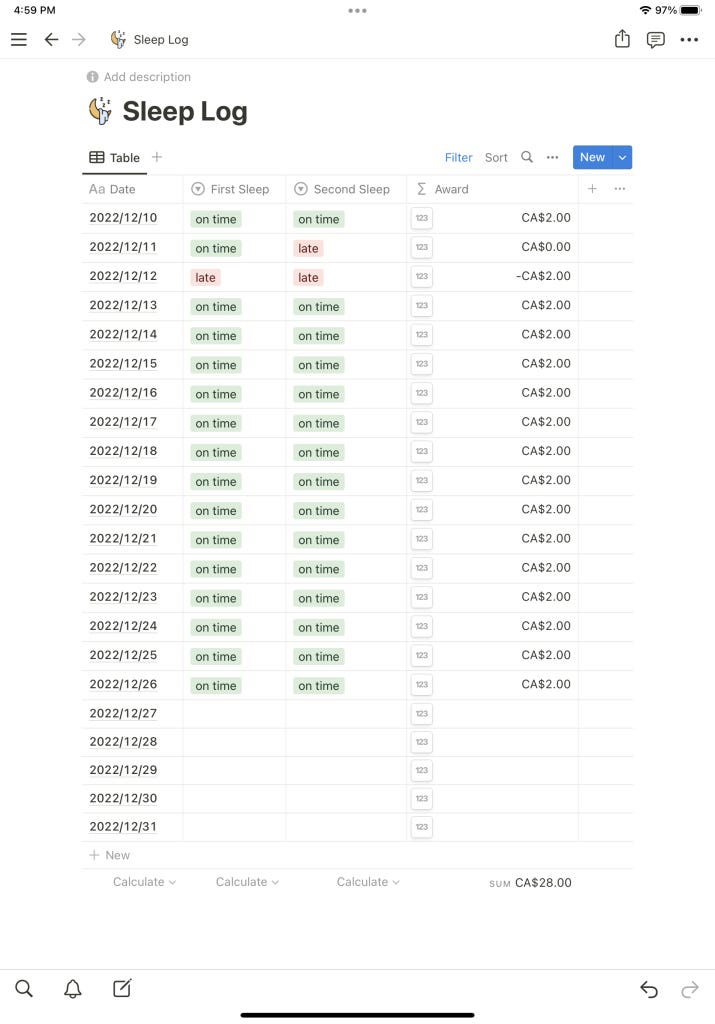
I’ve struggled with brushing my teeth my entire life, which made me develop an unhealthy relationship with them. A few years ago, I started a points and rewards system where I give myself a point every time I brush my teeth. Once I reached a certain number of points, I bought myself a reward. This system allowed me to develop a healthier relationship with my teeth, and I now don’t even need to use it to brush my teeth anymore, because it has become routine for me to do so. However, at some point during the time that I was tracking my dental care, I also started a similar system for my sleep. I‘ve also always struggled with sleep issues, in part because I struggle to get in bed on time. So I set up a system where I give myself a point when I go to bed on time, and detract a point when I go to bed late (I use positive and negative reinforcement simultaneously, because sleep is really important for me). I have biphasal sleep because I always wake up in the middle of the night, so each night I can accumulate two points (if I go to bed on time for both sleeps), no points (if I go to bed on time for one sleep and late for another), or I can lose two points (if I go to bed late for both sleeps). I still use this system.
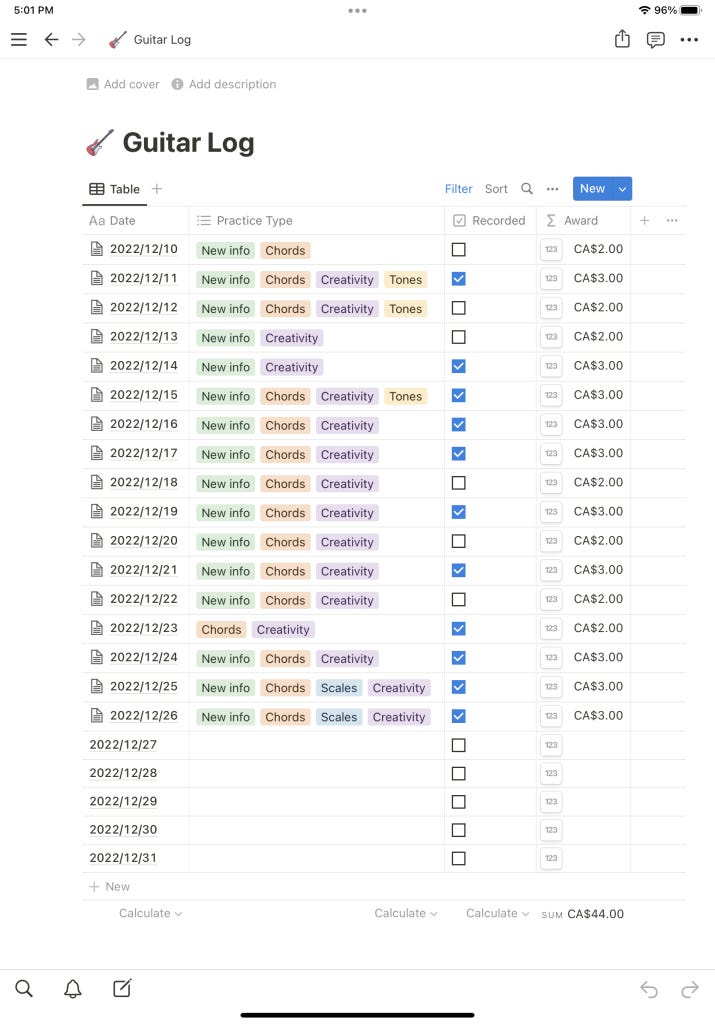
I recently got back into playing the guitar after a long time off, and I decided to use the same points system to stay committed. The way I’m doing it right now is that I give myself a point every day I practice, and another point if I practice something new—to keep myself learning new things. I also give myself a point if I record something—which motivates me to record regularly without obsessing over perfecting my playing, which is something I need right now.
I recently realized that I had accumulated so many points in my sleep and guitar logs that I had enough to buy myself a Nintendo Switch (a point represents $1), which is something that I really wanted.
When I got my Switch, that’s when the fun really started, and I felt that I hacked my ADHD. I set up a rule that I wouldn’t buy any game unless I earn it with enough points. I actually don’t like buying things randomly, and prefer to have some kind of meaning to purchases that I make, so attaching the games that I buy to my points and rewards system gives me a better relationship with my games, because it gives them meaning in my life.
I say that I “hacked my ADHD” because I am hyperfixated on acquiring all of the games that I want. I have the urge to get everything all at once—because this is the latest novelty in my life, and my brain is fixated on this New Thing and wants more and more of it. What this means is that my brain really wants to accumulate as many points as possible as fast as possible. I am, in fact, hyperfixating on accumulating points. So I’m using this to motivate me to be productive. In other words, I’ve hooked my hyperfixations on my productivity, so that I have to be productive to be able to enjoy my hyperfixations.
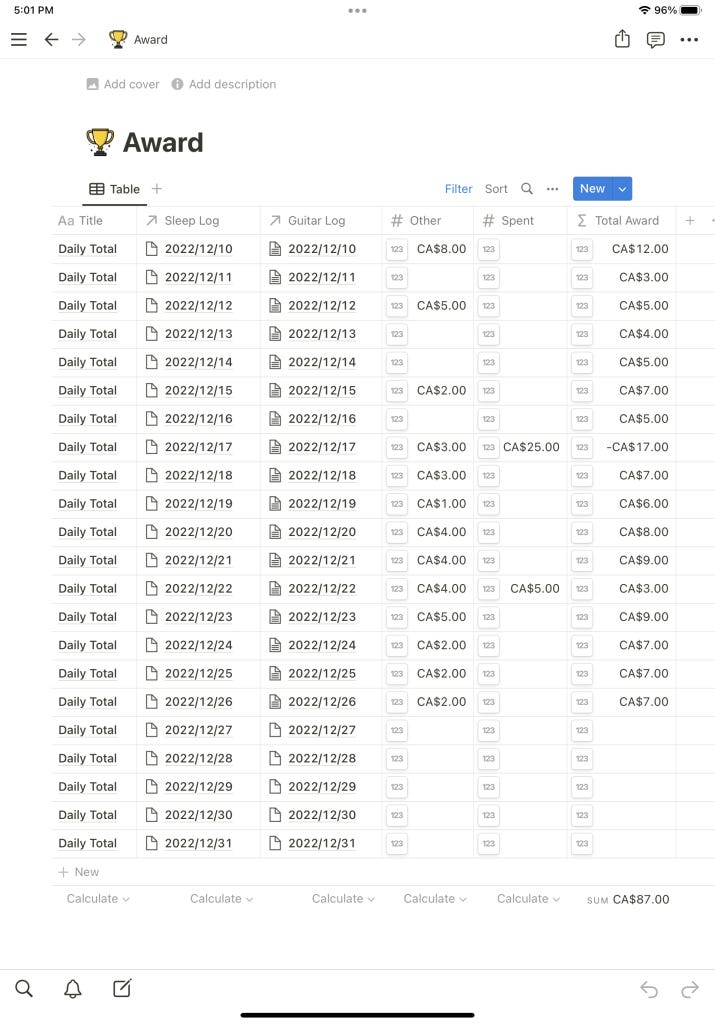
Aside from my sleep and guitar logs, I set up an “other” category where I accumulate points on various things—really, whatever I want to be productive on. And I’ve been finding that it helps me tremendously to be productive. Whenever I’m struggling with something that I need or want to do, I tell myself that I’ll reward myself if I do it, and doing it becomes much easier. My internal dialogue goes something like this:
“Urgh, I don’t have the energy to do X task.”
“There’s a reward in it for you, and you’ll be able to buy the game that you want sooner.”
“Oh, okay! Let me get started!”
I’ve noticed that I’m much more committed to being productive and accumulating points because the reward is concrete, and also more easily attained—which is to say, closer to me in time. When I know exactly what I want (such as a specific game, rather than just an abstract concept of “I’ll think of something to reward myself with”), and when it’s not too far away from me (because I can accumulate enough points for it within a few weeks, rather than months or more), it feels more real, and therefore I can stay focused on it more. Even with my sleep, I’ve been more committed to staying on track and going to bed on time since I attached the concrete reward of buying myself games (in the past, I just collected points and didn’t have a specific reward that I worked towards).
At first I thought that I was just finding excuses to accumulate points, but then I realized that if it works and makes me productive, that’s all that matters. In fact, I started writing this post by giving myself two points if I start and write 250 words. I ended up writing over 400 words on the first day, and on the following days, I didn’t need to give myself a point as motivation, because I had already gotten the executive dysfunction of starting out of the way (although I struggled to go back to the post to edit it, so I gave myself points to finalize it).
Of course, what I need a reward for depends on the task. For tasks that I find more difficult to get to every day, I can give myself a reward every day. I try not to feel guilty that I’m just looking for excuses to give myself points, because at least accumulating points means I’m being productive—and at the end of the day, I’m the one who set up this system, so I don’t really need to justify buying games; I just feel I have something to be proud of by attaching buying games to having a better grasp of my mental health and accomplishing my goals.
If you’re thinking that this system seems overwhelming to keep track of, and are wondering how I do it, the answer is that I use databases on Notion. I’ve automated everything as much as possible to minimize the amount of work I have to do to keep track of everything. This had the added benefit of making me need to figure out how to program the databases and write the formulas to make it all work, and as someone really into programming, really, I just love an excuse to learn to program something.
This is the sleep log (I’ve actually been to sleep on time every time since I started this system, but I selected the ‘late’ option to demonstrate how the points system works):
This is the guitar log:
This is the master log. I connected the sleep and guitar logs to each day and added an ‘other’ column. The ‘total award’ column keeps track of the total points I’ve accumulated each day. I also added a ‘spent’ column to keep track of the points that I spend and subtract them from the points I’ve accumulated. This gives me the number of points I have at any point in time, which is shown at the bottom of the ‘total award’ column.
What’s cool about this system is that it’s future-proofed. I might stop hyperfixating on my Nintendo Switch, but my brain will no doubt find something else to hyperfixate on that I will want to spend on. I have way too many expensive interests and can spend hundreds of dollars on them, only to later feel that I wasted money on something that I’m not using anymore. So I can easily replace one reward goal for another depending on whatever I’m hyperfixating on at the moment.
This also allows me to feel less guilty about spending on my hyperfixations, because it makes me feel that I earned the things that I bought. Rather than feeling that I have to justify what I buy by telling myself that I’m going to actually use it (which feels like a promise that I cannot keep), I feel that what I buy is already justified, because it’s something I’ve worked towards and that represents my accomplishments. What I do with it is up to me.